How to do a push-up
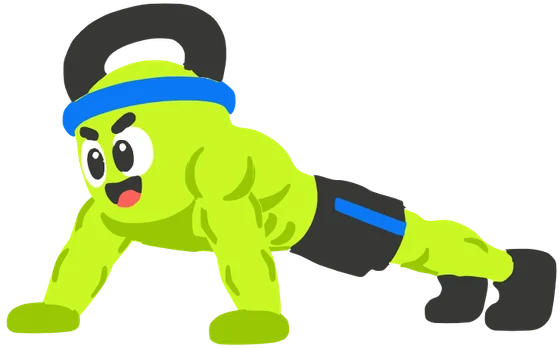
- Hands a little wider than your shoulders, fingers pointing forward.
- Body in one straight line from head to heels. Squeeze your glutes and brace your stomach as if someone was about to poke it.
- Elbows at about 45 degrees from your body, not flared out to the sides.
- Go down until your chest is about a fist above the floor.
- Push the floor away until your arms are straight again. Breathe in on the way down, out on the way up.
Variations, from easiest to hardest
Pick the variation where you can do 8 to 12 clean reps. That’s your starting point.
Wall push-ups
Hands on a wall at shoulder height, feet a step back. The easiest way to learn the movement.
Incline push-ups
Hands on a kitchen counter, a table or a stair. The lower the surface, the harder it gets, so you can make tiny steps forward.
Knee push-ups
On your knees, with your body still in a straight line from head to knees. Don’t let your hips stay up in the air.
Negative push-ups
Start at the top of a full push-up and lower yourself in 3 to 5 seconds. Drop to your knees to get back up, then repeat.
Full push-ups
The real thing. Once 3 sets of 12 feel solid, try diamond push-ups, feet on a step or archer push-ups.
A 4-week beginner plan
Three sessions a week with a rest day in between. Rest 60 to 90 seconds between sets and stop each set when your form starts to break, one or two reps before you can’t go on.
| Week | Workout |
|---|---|
| 1 | 3 sets of 8–12 of your variation |
| 2 | 4 sets of 8–12 of your variation |
| 3 | One step harder (lower surface or the next variation): 3 sets of as many clean reps as you can |
| 4 | 2 sets of the harder variation, then 2 sets of the easier one |
Common mistakes
- Sagging hips. Your lower back takes the load. Squeeze your glutes and keep the line.
- Elbows flared out. Hard on the shoulders. Tuck them to about 45 degrees.
- Half reps. Going down a few centimeters looks like more reps, but builds less strength.
- Head dropping. Look at the floor a little in front of your hands, so your neck stays in line.
- Rushing. Two seconds down, one second up builds more than bouncing.
How often should you do push-ups?
Two to four times a week is plenty for most beginners. Your muscles get stronger in the rest days between sessions, so doing hard sets every single day often slows you down.

Let Burly plan it
Burly starts at your level and raises your targets as soon as you hit them. It shows you every exercise on a loop, keeps time with a set clock and rest timer, and can count your reps by voice.
Join the Discord (opens in a new tab)Coming soon to the App Store. Free, for iPhone.
If you have pain, an injury or a health condition, check with a doctor or physiotherapist before you start. Training should feel hard, not painful.