What is calisthenics?
Calisthenics is strength training where your body is the weight. Instead of adding plates to a bar, you change the exercise: hands higher or lower, one leg instead of two, slower on the way down. That’s why it suits beginners so well. There is an easy version of almost everything.
Most of it needs no equipment at all. A pull-up bar and something to do dips on, like two sturdy chairs or parallel bars at a park, cover the rest.
The basics to learn first
Skip handstands and muscle-ups for now. These six moves build the strength everything else needs:
Push-ups
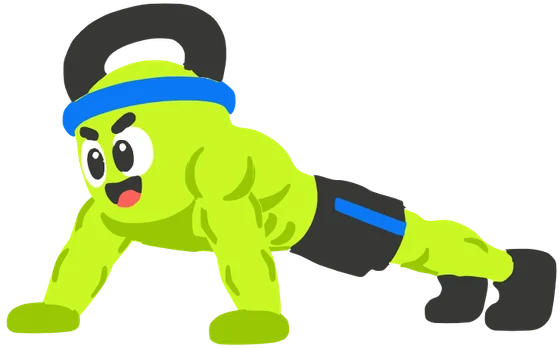
Chest, shoulders and arms. Start with your hands on a table or counter if a full push-up is too hard.
Squats
Legs and glutes. Sit back as if onto a chair, knees in line with your toes, chest up.
Rows and pull-ups
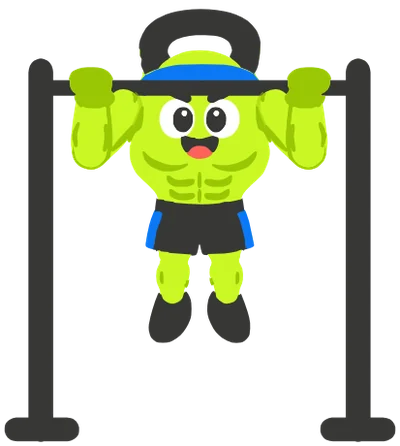
Your back. Start with Australian rows under a low bar or table, then negatives on a pull-up bar.
Dips
Chest, shoulders and triceps. Begin with bench dips on a chair, later move to parallel bars.
Lunges
One leg at a time, for strength and balance. Reverse lunges are the easiest on the knees.
Plank
Your core. Hold a straight line from head to heels. Later, the hollow hold makes it harder.
A 3-day beginner plan
Train your whole body three times a week, for example Monday, Wednesday and Friday. Rest 60 to 90 seconds between sets. Choose versions where the last two reps of each set are hard but clean.
| Move | Sets × reps |
|---|---|
| Push-ups (your variation) | 3 × 8–12 |
| Australian rows or negative pull-ups | 3 × 8–12 or 3 × 3 |
| Squats | 3 × 12–15 |
| Bench dips | 3 × 8–12 |
| Reverse lunges | 2 × 8 per leg |
| Plank | 3 × 20–40 s |
How to progress
When you can do the top of the rep range for all sets with good form, move to the next step and start again at the bottom of the range.
| Move | Start | Next | Later |
|---|---|---|---|
| Push | Incline push-ups | Full push-ups | Diamond or archer push-ups |
| Pull | Australian rows | Negative pull-ups | Full pull-ups |
| Legs | Squats | Split squats | Assisted pistol squats |
| Dips | Bench dips | Negative dips | Parallel bar dips |
| Core | Plank | Hollow hold | L-sit |
Common beginner mistakes
- Chasing skills too early. Handstands and muscle-ups come much faster once the basics are strong.
- No plan. Random workouts feel busy, but a plan that gets harder each week is what makes you stronger.
- Ego reps. Partial push-ups and swinging pull-ups look like progress, but aren’t.
- Forgetting legs. Squats and lunges belong in every week.
- No rest days. Two or three sessions you keep up beat six you can’t.
Can you build muscle with calisthenics?
Yes. Your muscles respond to hard work, not to where the weight comes from. As long as the exercises keep getting harder and you eat enough protein, bodyweight training builds strength and muscle. Most beginners notice they’re stronger within the first few weeks.
Let Burly plan it
Burly turns these basics into a plan for you. It starts at your level, shows every exercise on a loop and raises your targets as soon as you hit them, with XP, levels and a streak that keeps you going.
Join the Discord (opens in a new tab)Coming soon to the App Store. Free, for iPhone.
If you have pain, an injury or a health condition, check with a doctor or physiotherapist before you start. Training should feel hard, not painful.